Buying toner sounds simple until you start looking at your options.
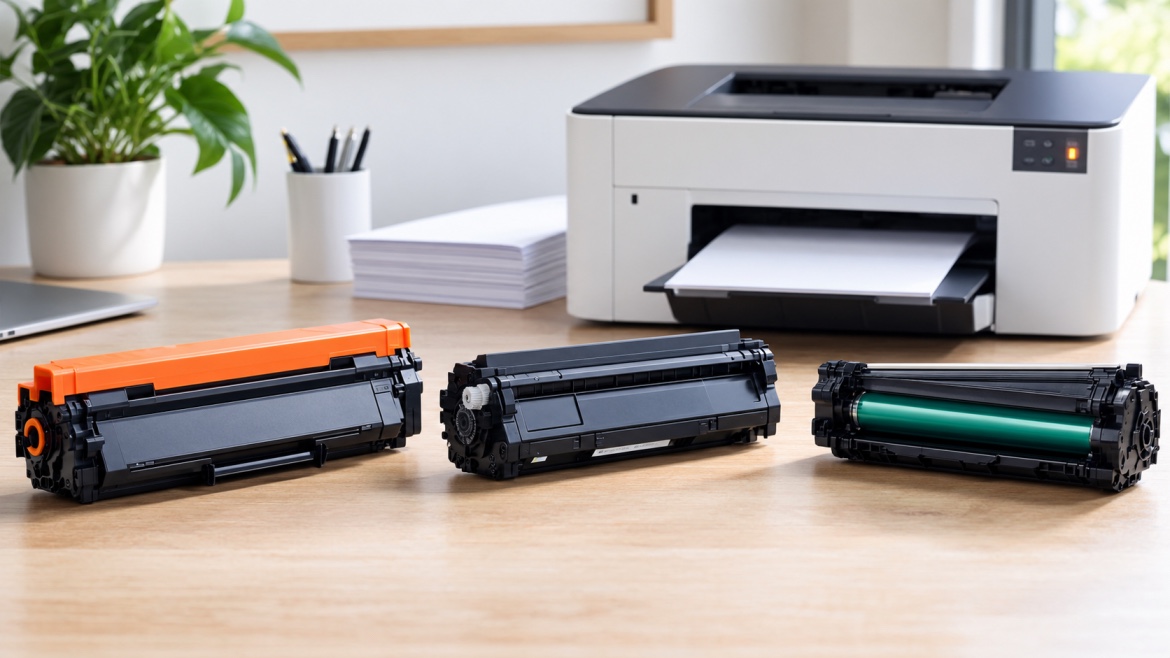
For the same printer, you might find genuine toner, compatible toner and remanufactured toner. The cartridges may all be designed to work with your printer, but they are made differently and can offer different advantages.
So which one should you choose?
The answer depends on how much you print, what you expect from your printer, your budget and how important print consistency is to you.
Let's look at the differences without making it complicated.
What Is Genuine Toner?
Genuine toner is made by the original printer manufacturer for its own printers.
For example, an HP toner cartridge made for an HP laser printer is genuine HP toner. The same applies to Brother, Canon, Epson and other printer manufacturers.
These cartridges are made specifically for the manufacturer's printers and are generally the most straightforward option when you want to use the original consumable.
Why Do People Choose Genuine Toner?
Genuine toner can be a good fit when you:
- Prefer to use the original manufacturer's cartridge
- Want a cartridge specifically designed for your printer
- Rely on your printer for regular business or office work
- Prefer to stay with the manufacturer's recommended consumables
- Want to minimise concerns about cartridge compatibility
The main consideration is usually cost. Genuine cartridges can be more expensive than compatible or remanufactured alternatives.
That doesn't necessarily make them the right choice for everyone. It comes down to what matters most for your printing.
What Is Compatible Toner?
Compatible toner is a new cartridge made by a third-party manufacturer rather than the original printer brand.
It is designed to fit and work with a particular printer model or cartridge number.
A well-made compatible cartridge can provide reliable everyday printing without being an original-brand cartridge.
Why Do People Choose Compatible Toner?
Compatible toner is often considered by people who:
- Want to reduce the cost of printing
- Print regularly at home or in the office
- Need an alternative to genuine cartridges
- Want a new cartridge rather than a reused one
- Are comfortable using a third-party product
One important point is that not all compatible toner cartridges are made to the same standard.
This is where toner quality matters.
A very cheap cartridge isn't necessarily good value if the print quality is inconsistent or the cartridge causes problems during use.
It's worth looking at the cartridge manufacturer, supplier, guarantee and exact compatibility rather than choosing on price alone.
What Is Remanufactured Toner?
A remanufactured toner cartridge starts with a previously used cartridge.
Instead of throwing the cartridge away, it is processed and prepared for another use. Depending on the remanufacturing process, the cartridge may be cleaned, inspected, refilled and have certain components replaced or serviced.
The exact process can vary between suppliers.
The idea is simple: reuse an existing cartridge rather than starting with a completely new cartridge housing.
Why Consider Remanufactured Toner?
A remanufactured cartridge may appeal to people who:
- Want an alternative to genuine toner
- Are looking for a potentially lower-cost option
- Prefer to reuse cartridge components
- Want to reduce unnecessary cartridge waste
- Don't mind using a professionally remanufactured cartridge
As with compatible cartridges, the quality can depend heavily on how the cartridge has been processed and tested.
Genuine vs Compatible vs Remanufactured Toner
Here's the simplest way to understand the difference:
| Toner type | What it is | What to consider |
| Genuine toner | Made by the original printer manufacturer | Usually costs more |
| Compatible toner | A new cartridge made by a third-party manufacturer | Quality can vary between suppliers |
| Remanufactured toner | A previously used cartridge that has been processed and refilled | Quality depends on the remanufacturing process |
None of these options is automatically right for every printer user.
The better question is: Which option makes sense for the way you print?
Does Genuine Toner Always Give Better Print Quality?
Genuine cartridges are made by the original printer manufacturer, but the label alone isn't the only thing that determines your printing experience.
Toner quality also depends on the cartridge construction, toner formulation, components and how well the cartridge is suited to the printer.
With a genuine cartridge, you are buying the original manufacturer's consumable.
With compatible and remanufactured cartridges, the supplier and manufacturing or remanufacturing standards become much more important.
If print quality matters to you, look for consistent:
- Text clarity
- Solid black areas
- Grey shading
- Page-to-page output
- Cartridge performance throughout its usable life
For everyday documents, a good-quality compatible or remanufactured cartridge may be suitable for your needs.
If you specifically prefer the original manufacturer's consumable, genuine toner is the obvious option.
Is Compatible Toner Safe to Use?
Using a compatible toner cartridge does not automatically mean your printer will be damaged.
The important thing is whether the cartridge is correctly designed for your particular printer and cartridge reference.
A cartridge that looks similar isn't necessarily the correct one.
Before buying, confirm:
- Your exact printer model
- The cartridge number
- Whether the cartridge is specifically listed as compatible with that printer
This small step can save you from ordering the wrong cartridge.
Is Remanufactured Toner Reliable?
It can be, but the quality of the remanufacturing process matters.
A professionally remanufactured cartridge may be cleaned, inspected, refilled and tested before being sold again.
However, remanufactured cartridges are not all processed in exactly the same way.
If reliability is important, look at the supplier's quality process, guarantee and customer support rather than assuming every remanufactured cartridge will perform identically.
What About Cost Per Page?
The price of the cartridge is only part of the picture.
It's also useful to consider how many pages the cartridge is expected to print.
A simple calculation is:
Cost per page = Cartridge price ÷ Page yield
For example, if a toner cartridge costs $100 and has a stated yield of 2,000 pages:
$100 ÷ 2,000 = 5 cents per page
This gives you a better starting point for comparing cartridges.
Keep in mind that actual results can vary. A document filled with graphics and large areas of black will generally use more toner than a simple page of text.
Should You Choose Toner Based on Price?
Price matters, especially if you print frequently, but it shouldn't be the only thing you look at.
A cartridge that costs less upfront may not be good value if you experience:
- Poor or inconsistent print quality
- Lower-than-expected page output
- Cartridge errors
- Wasted pages
- Frequent troubleshooting
Instead of asking only "Which cartridge is cheapest?", consider "Which cartridge gives me the value and reliability I need?"
That small change in how you compare cartridges can make the decision much easier.
How Do You Choose the Right Toner?
Before placing an order, work through these simple steps.
1. Find Your Exact Printer Model
Start with the full printer model, not just the brand.
A single manufacturer can have many printers that use completely different cartridges.
2. Find the Cartridge Number
The cartridge number is often the most useful piece of information when looking for a replacement.
You may find it on your existing cartridge, its packaging, your printer documentation or the manufacturer's information.
3. Decide Which Type Suits You
Think about what you actually want from the cartridge.
Do you prefer:
- The original manufacturer's cartridge?
- A new third-party alternative?
- A professionally remanufactured cartridge?
- A lower overall printing cost?
There isn't a need to choose based on what someone else uses. Your printing habits are what matter.
4. Compare Page Yield
Look at the expected page yield alongside the cartridge price.
This can give you a much clearer idea of your potential printing cost.
5. Look at the Supplier
The supplier matters, particularly when you're buying compatible or remanufactured toner.
Look for clear product information, cartridge guarantees and support if something doesn't go as expected.
Which Toner Is Best for Home Printing?
For occasional home printing, your priorities may be different from those of a busy office.
If you only print school assignments, forms and occasional documents, you may be more interested in keeping cartridge costs reasonable.
A good-quality compatible cartridge may be worth considering if it is correctly matched to your printer.
If you prefer to use the original manufacturer's consumables, genuine toner remains an option.
Which Toner Is Better for Business Printing?
Businesses often print more frequently, so consistency and predictable running costs can become more important.
You may want to consider:
- Expected monthly page volume
- Cost per page
- Print quality
- Cartridge reliability
- Replacement availability
- Supplier support
For a business that depends on its printer every day, avoiding interruptions may be more important than saving the maximum amount on each cartridge.
Common Mistakes When Buying Toner
Choosing only by price
The cheapest cartridge isn't always the cheapest to use.
Consider the yield and expected performance as well.
Buying based only on the printer brand
Knowing that you have a Brother, Canon, HP or another brand isn't enough.
Always confirm the exact printer model and cartridge number.
Assuming all compatible cartridges are identical
Compatible toner can vary between manufacturers and suppliers.
Quality, components and testing standards can be different.
Ignoring page yield
Two cartridges that fit the same printer may have different expected yields.
Leaving the purchase until the last minute
If your printer is important for work or study, having a suitable replacement ready can save you from an unexpected interruption.
A Simple Way to Compare Your Options
If you're unsure which cartridge type to choose, ask yourself four questions:
What printer do I have?
Find the exact model.
What cartridge does it use?
Confirm the cartridge number.
How much do I print?
Think about your normal usage rather than an unusually busy month.
What matters most to me?
It might be original manufacturer support, lower cost, reuse, print quality or overall value.
Once you have those answers, the choice between genuine, compatible and remanufactured toner becomes much clearer.
The Bottom Line
Choosing between genuine, compatible and remanufactured toner isn't simply about finding the cheapest cartridge.
Genuine toner gives you the original manufacturer's option. Compatible toner offers a new third-party alternative, while remanufactured toner reuses an existing cartridge that has been processed and prepared for further use.
Whichever route you take, start by identifying your exact printer model and cartridge number. Then consider toner quality, page yield, price, guarantee and supplier support.
The right cartridge is the one that fits your printer and makes sense for the way you actually print.