
Wondering how long do ink cartridges last? The answer depends on whether the cartridge is still sealed, how it has been stored, the printer it is designed for and how often it is used. An unopened cartridge can remain usable for a considerable period when stored correctly, while an installed cartridge may experience drying or print-quality issues sooner, particularly if the printer sits unused.
For Australian homes and businesses, understanding ink cartridge shelf life, proper cartridge storage and ink expiry can help prevent wasted cartridges and unexpected printing problems. Here is what you need to know before keeping spare cartridges in the cupboard or replacing an older one.
How Long Do Ink Cartridges Last?
There is no single expiry period that applies to every ink cartridge. Manufacturers can specify different recommended use-by dates and storage requirements depending on the cartridge design, ink formulation and printer.
As a general rule, an unopened ink cartridge lasts longer than an installed cartridge, provided it remains sealed and is stored under suitable conditions. Once installed, the cartridge is exposed to the printer's operating environment and may gradually experience changes in ink flow or print performance.
The actual ink cartridge shelf life can be influenced by several factors, including:
- Whether the cartridge is unopened or installed
- The manufacturer's recommended expiry or use-by date
- Storage temperature and humidity
- Exposure to sunlight
- How frequently the printer is used
- The type of printer and cartridge
- Whether the cartridge is genuine, compatible or remanufactured
- How well the cartridge has been handled and stored
For example, someone who prints every day may use a cartridge well before its shelf life becomes a concern. Someone who prints only a few pages each month may keep cartridges for much longer and therefore needs to pay closer attention to storage and expiry information.
It is also worth remembering that cartridge shelf life and page yield are different things. Page yield refers to approximately how many pages a cartridge can print under specified testing conditions. Shelf life refers to how long the cartridge can remain suitable for use.
Can an expired ink cartridge still work?
Sometimes, but there is no guarantee.
An ink cartridge that has passed its manufacturer's recommended date may still produce acceptable prints, particularly if it has been stored correctly. However, its performance can become less predictable. You may notice faded output, inconsistent colours, streaking or other print-quality issues.
Rather than relying only on the date printed on the packaging, consider the cartridge's condition, storage history and printer compatibility as well.
What Affects Ink Cartridge Shelf Life?
Ink is a liquid-based printing medium, so its performance can be affected by environmental conditions and time. The cartridge itself also contains components designed to deliver ink consistently to the printer.
Keeping cartridges sealed is an important first step, but sealed does not mean immune to ageing. Poor storage conditions can affect cartridge performance even before it is opened.
Key factors that affect cartridge life
Storage temperature
Avoid storing ink cartridges in locations exposed to excessive heat or major temperature fluctuations. This is particularly relevant in Australia, where temperatures inside garages, sheds, vehicles and poorly ventilated storage areas can become very high during summer.
A stable indoor environment is generally a better choice than a hot garage or car.
Humidity
Excessive moisture and damp conditions are not ideal for storing printer consumables. Keep cartridges in a dry location and away from areas such as bathrooms, laundry rooms or places prone to condensation.
Sunlight
Direct sunlight and prolonged exposure to strong light can contribute to deterioration of packaging and cartridge components. Store cartridges away from windows and other locations where they receive direct sunlight.
Original packaging
Keep unused cartridges sealed in their original packaging until you actually need them. Packaging helps protect the cartridge from environmental exposure and physical damage.
If you buy replacement cartridges in advance, avoid opening the packaging simply to inspect the cartridge. Keep it sealed until installation.
Printer usage
How often you print matters once a cartridge has been installed. If a printer remains unused for extended periods, ink can dry around the printhead or ink delivery system, depending on the printer design.
This is one reason occasional printing can be useful for people who rarely use their printer. Always follow the printer manufacturer's maintenance recommendations rather than repeatedly running cleaning cycles unnecessarily.
Ink expiry
Check the manufacturer's information for any expiry, use-by or recommended-use date. Different manufacturers and cartridge types can have different guidance.
An expiry date should not automatically be treated as a guarantee that a cartridge will stop working immediately. Instead, it indicates that the manufacturer no longer guarantees the same level of performance after that point.
Cartridge compatibility
Using the correct cartridge for your printer is essential. Even if an old cartridge physically fits, it may not be the correct consumable for the printer.
Check the printer model and cartridge number before purchasing or installing a replacement. Compatibility can affect recognition, ink delivery and overall print performance.
How Should You Store Ink Cartridges?
Good cartridge storage is one of the easiest ways to protect unused ink cartridges.
For Australian households and workplaces, choose a location that is cool, dry and away from direct sunlight. A cupboard inside the home or office is generally more suitable than a garage, car boot, shed or window ledge.
Follow these practical steps:
- Keep cartridges sealed in their original packaging until required.
- Store them indoors rather than in areas exposed to extreme temperatures.
- Avoid direct sunlight, especially through windows.
- Keep cartridges dry and away from excessive humidity.
- Avoid significant temperature changes, such as moving cartridges repeatedly between hot and cool environments.
- Do not place heavy objects on cartridge packaging.
- Check the cartridge date and packaging condition before installation.
- Confirm the cartridge number matches your printer before opening it.
It can also help to avoid buying far more cartridges than you are likely to use. If you print infrequently, purchasing a large stockpile may mean some cartridges sit unused for a long time.
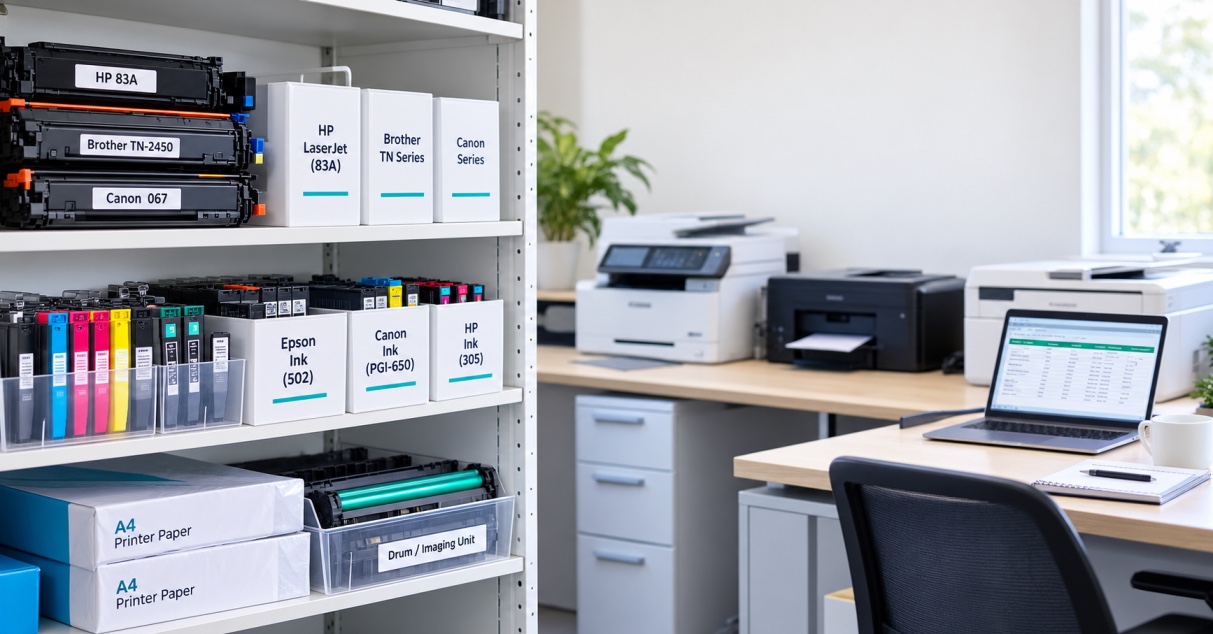
For businesses with several printers, it is worth keeping replacement cartridges organised by printer model and using older stock appropriately rather than allowing cartridges to remain forgotten at the back of a cupboard.
What are the signs an old ink cartridge may need replacing?
An ageing or poorly stored cartridge does not always fail completely. Instead, you may notice changes in print quality.
Common warning signs include:
- Faded or unusually light printing
- Missing lines or sections of text
- Streaks across printed pages
- Incorrect or inconsistent colours
- Frequent printhead cleaning requirements
- The printer failing to recognise the cartridge
- Visible damage or leakage around the cartridge
Before replacing the cartridge, check whether the problem could instead be caused by clogged printheads, incorrect printer settings, low ink levels or another printer issue.
How Can You Avoid Wasting Ink Cartridges?
Understanding how long do ink cartridges last is useful, but good purchasing and storage habits can make an even bigger difference.
If you only print occasionally, avoid buying large quantities of cartridges simply because they are discounted. Consider your actual printing volume and choose cartridges that you are likely to use within the manufacturer's recommended period.
It is also sensible to check the cartridge number before purchasing. Ordering the wrong cartridge can turn a seemingly good deal into an unnecessary expense.
For regular home, office and business printing, having the right replacement cartridge available when you need it can prevent last-minute purchases. The Toner Group provides Printer Cartridges for a range of printing requirements, making it easier to find a suitable replacement for your printer.
Frequently Asked Questions
How long do ink cartridges last if unopened?
An unopened ink cartridge can remain usable for a significant period when it is properly sealed and stored under suitable conditions. The exact shelf life varies by manufacturer and cartridge type, so check the manufacturer's date and recommendations.
Do ink cartridges expire?
Yes, ink cartridges can have expiry or recommended-use dates. However, an expired cartridge may not necessarily stop working immediately. Its performance may simply become less predictable, particularly if it has been stored poorly.
Is it OK to store ink cartridges in a garage?
It is generally better to avoid garages for long-term cartridge storage because Australian garages can experience substantial heat and temperature fluctuations. An indoor, dry and stable environment is usually more suitable.
Should I keep spare ink cartridges in their packaging?
Yes. Keeping unused cartridges in their original packaging until they are needed helps protect them from environmental exposure, light and physical damage.
Does not using a printer make ink cartridges last longer?
Not necessarily. An unopened cartridge can benefit from remaining sealed, but once installed, leaving a printer unused for a long time can contribute to ink drying or printhead issues depending on the printer. Follow the maintenance guidance for your specific printer.
Conclusion: How Long Do Ink Cartridges Last?
So, how long do ink cartridges last? There is no universal timeframe. An unopened cartridge that is kept sealed, stored correctly and used within the manufacturer's recommended period has the best chance of delivering reliable results. Heat, humidity, sunlight, poor storage and prolonged inactivity after installation can all contribute to printing problems.
For Australian users, proper cartridge storage is especially important during periods of high temperatures. Rather than simply keeping spare cartridges wherever there is room, store them indoors in a stable, dry location and check the manufacturer's guidance before use.
When it is time for a replacement, choosing the correct Printer Cartridge for your specific printer can help you avoid compatibility and print-quality problems.
Need reliable ink cartridges for your printer? Explore Printer Cartridges from The Toner Group or contact the team for help finding the right option.
Phone: 1300 041-170
Email: info@thetonergroup.com.au